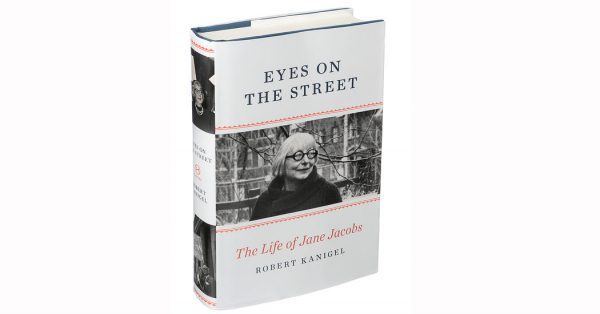
" />

Friday 5: August 21st -27th

On August 27, 2010, in Friday 5, articles, by Yuri Artibise
  • Great Good Places: New restaurants that look like they’ve been part of their neighborhoods forever all share a subtle but ambitious social agenda: to create and celebrate community.(MetropolisMag.com)
Enhanced by Zemanta

Thanks for being a regular reader of my site!

4569093492 2f83ecba00 z The Magic is in the Mix: Rethinking Mixed Use Urbanism

Photo Credit: Nick Bastian on Flickr

‘Mixed-use’ is one of the most over-used, yet most misunderstood phrases in urban development. In recent years, ‘mixed-use buildings’ has become the new planning dogma, just like ‘specialized buildings’ was before it.

Many cities have invested a lot of money in developing mixed-use buildings, streets and neighborhoods, but haven’t achieved the urban vibrancy they want. This is often times because their underlying urban fabric remains coarse (i.e. large and monotonous).

In most new urbanist mixed-use developments the residential units are often all high-end condos and the retail is usually a series of chain stores. Moreover, little in the neighborhood is more than a few years old. Thus, although the uses may seem mixed, the culture is monolithic. At the same time, many arts districts face the same fate of attracting monolithic culture (albeit completely different from the previous example). A block of live work galleries doesn’t make for a vibrant neighborhood bur rather an artists ghetto.

Looking for a Phx

In downtown Phoenix, these two extremes are seen in the artist collectives and bars that have functioned, but never flourished along Grand Ave for the past decade or so on one hand; and the monotonous collection of upper middle-class restaurants and retail outlets being rolled out at CityScape on the other.

The reason that these types of mixed-use areas fail to live up to expectation is that they are too economically—and therefore, functionally limited—to be lively, interesting and convenient for a range of people. They lack the intermingling of class and functionality that offer the stimulation and interest essential to a vibrant urban core.

So the question remains: If mixed-use isn’t the answer, what it?

Urban Diversity

Perhaps a better way of looking at mixed use, is ‘diversity’. This was a basis tenant of Jane Jacobs in her classic tome, The Death and Life and Great American Cities. Diversity, according to Jacobs, isn’t simply a mix of uses but an integration of business types:

4424212013 d470026667 z The Magic is in the Mix: Rethinking Mixed Use Urbanism

Photo Credit: UrbanGrammar on Flickr

“True diversity requires the “mingling of high yield middling yield, low yield, and no-yield enterprises” —Jane Jacobs

To me, “mixed use” means more than mixing residential and commercial. It also means proximity to other uses like schools/universities, parks, museums, courthouses, industries, meditation, train stations, etc. The reality is that not every building needs to have multiple uses or tenants but each block should and each neighborhood must.

These kinds of destinations help to define a city’s identity. They do so through the variety of uses and public spaces that highlight local assets and unique talents and skills of the communityeducational, cultural, and commercialthat are all open and available to all visitors to enjoy for free.

Such neighborhoods allow residents to visit, become involved and stay awhile. They are not defined by architecture, but rather the uses that are front and center and the buildings and design elements that support them.

Replacing Mixed with Multiple

“It is fatal to specialize… the more diverse we are in what we can do the better.” Jane Jacobs

Perhaps then it is time to move beyond the simple concept of ‘mixed use’ to a more robust style of development. The time of simply thinking of urban development as “Starbucks over condos, maybe with a train that comes every day” has passed.

Instead we need to start thinking of creating neighborhoods that build authentic places through multiple uses that are intimately related, interconnected and interdependent. After all, true urban diversity comes from the relationships between uses, tenants, and the organizations within a place.

Enhanced by Zemanta

Urban Connectivity

On July 27, 2010, in Opinion, Urbanite Dictionary, urbanism, by Yuri Artibise

Last week, I introduced the notion of urban fabric. Urban fabric is not just the built form, however. It also reflects the delicate interweaving of social, economic and physical connections.

New developments need to be looked at not as single entities, but are part of a block, a neighborhood, a city, a region. Design guidelines and zoning that respect historic context and pedestrian scale are essential to creating great buildings and enduring places. Moreover, since every project is part of the overall urban fabric, how projects connect to each other and to the city is a central tenet of urban design. Streets, public transit, bikeways and connected green space tie the city together. They provide the framework for a vibrant city.

Connectivity is Key

 Urban Connectivity

Compare the connectivity of the sprawl on the north side of the arterial to the more urban grid network on the south side.

Creating more direct connections shortens travel time, which effectively brings people closer to their destinations. With more available connections, community residents can get to schools, shopping centers, and other spots that may have simply been off their radar before—not because these places were too far away—but because they were too far out of the way. Intuitively this makes sense; the smaller the blocks, the greater number of intersections, the more storefronts, the more choice of routes, the more chances for serendipity. All this leads to more urban vitality.

As a side benefit of increased connectivity is the decreased burden of delivering public services. Firefighters, police, and ambulance services can save precious minutes reaching the scene of an emergency, and can serve a broader area without driving up operating costs. Similarly, greater connectivity can reduce costs of providing other services, such as waste collection, by decreasing travel time and mileage. This leads to more efficient use of limited tax dollars.

Urban Fabric Redux

This leads us back to the concept of urban fabric. Even within the tightest natural fabrics there remains porosity and permeability; i.e. openings that allow for connection and interaction with the outside environment. Alas, in many master-planned suburban and even many ‘new urban’ developments, the urban fabric is artificial. And like artificial fabrics, such as polyester, these projects do not ‘breath’—or allow for external interaction—even though they may get the right grain of urban fabric.

The Important of Interdependence

The following is an excerpt of a 2000 discussion between Hank Bromley (HB) and Jane Jacobs (JJ) published in the July 2000 edition of ArtVoice.

HB: So the effect of putting an enormous single-purpose entity within this fine network of the city core is the same as putting a huge field of a single crop in the middle of an ecology: it renders the whole thing essentially sterile, incapable of generating anything new.

JJ: That’s right, and wow, watch out when a disease hits that one thing.

HB: It no longer has the resilience of the natural system that relied on the interdependence of many different ingredients.

Thus, it is better to have many small projects that interconnect with the existing city fabric—and are interdependent with the city at large—than to ‘redevelop’ entire sections of the city in isolation, even if it would otherwise support pedestrianism. This concept is connected to the need for a mix of building ages, not only to create a diversity of uses (and users), but almost as importantly, to create visual diversity and an aesthetic interest in the city. This is what urban vitality is all about.

Enhanced by Zemanta

Urban Fabric

On July 19, 2010, in Opinion, Urbanite Dictionary, urbanism, by Yuri Artibise

Urban fabric is the physical form of towns and cities. Like textiles, urban fabric comes in many different types and weaves.

 Urban Fabric

For simplicity’s sake, I am going to divide the multiple of different urban fabrics into two typologies: coarse grain and fine grain:

COARSE GRAIN

“Long blocks isolate the users of one street from the next one over. This isolation reduces the capability of those living on these streets to jointly support retail establishments.” —Jane Jacobs

Coarse grain urban fabric is like burlap: rough, large-scale weaves that are functional, but not usually comfortable. Such places consist of one of two things. Large blocks, predominated by big box stores and other car contract retail and corporate centers, or multi block mega project dropped on a city without integrating the surrounding city or community. In downtown Phoenix, developments like Arizona Center and CityScape come to mind.

Not only do coarse grain fabrics NOT provide many opportunities for interconnecting; the fabric itself is usually inhospitable to interaction. Instead of asserting control over the street, such places turn inward, fortifying themselves against the perceived dangers of the outside. This begets yet more undesirability. In this regard coarse grain acts as a barrier for all but those who are there for a specific purpose. Just as we are not comfortable wearing a burlap shirt, we are not comfortable spending more time them necessary in coarse-grained places.

“…the effect of putting an enormous single-purpose entity within this fine network of the city core is the same as putting a huge field of a single crop in the middle of an ecology: it renders the whole thing essentially sterile, incapable of generating anything new.” – James Howard Kunstler

FINE GRAIN

“Street patterns must be easily navigable and lattice like, with blocks that are not too big and intersections that are not too far apart.” —Roger Lewis

On the other hand, there is fine-grained urban fabric. Like high count egyptian (or perhaps pima) cotton; fine grain urban fabric can feel luxurious and want to make people linger in or around it. Fine grain urban fabric consists of several small blocks in close proximity. Within each block are several buildings, most with narrow frontages, frequent store fronts, and minimal setbacks from the street. Streets and opportunities to turn corners are frequent, and as a result, so are storefronts. This offers many opportunities for discovery and exploration. There are virtual no vacant lots or surface parking. Also, as there are more intersections, traffic is slower and safer.

Fine grained urban fabric is not imposed on a community like it’s coarse cousin. Rather, it evolves over time in a piecemeal way, responding to what came before it, and adapting to what came afterwards. This evolutionary process creates place that are not frozen in the era when they were built, but are dynamic and reflective of a neighborhood’s changing needs. This creates an urban fabric that can seamlessly evolve over time from lightly developed residential areas to mixed used retail to dense urban core, if that’s what the community desires. In this way, there are far more resilient than the mega projects mentioned above who, when they lose a single tenant, often fail.

Enhanced by Zemanta

Friday 5 – July 10th-16th

On July 16, 2010, in Friday 5, articles, by Yuri Artibise

This week’s miscellany:

Enhanced by Zemanta

Friday 5: June 19th-25th

On June 25, 2010, in Friday 5, articles, by Yuri Artibise

The latest installment of what I’ve been reading online.

     Friday 5: June 19th 25th

    Photo Credit: Mario Zamarripa (Flickr)

  • Connecting With Neighbors Online: Dispelling stereotypes about Internet-addicted shut-ins: “daily Internet users are more likely to know their neighbors’ names, and talk with them face to face, than non Internet users.” (Next American City)
  • Are we there yet?: A look at the impact that small factors—such as gas prices—have on major decisions—such as where one lives. (The Economist’ Free Exchange Blog)

Enhanced by Zemanta

Posted on JanesWalkPhx on June 21, 2010.

29732 1317601896863 1135214662 30799308 105509 n JaneScore—Coming to a neighborhood near you? (JanesWalkPhx)

Photograph by Modern Phoenix

By now, most people have heard about Walk Score, the tool that calculates how walkable a neighborhood is and ranks it on a 100-point scale. Developed by Seattle developer Mike Mathieu and others, it helps quantify walkability and promote its value in the real estate industry.

Despite being widely hailed, there have been many complaints about its implementation. Walk Score initially failed to account for transit options (since fixed). But perhaps more importantly, it uses a simple metric that measures only than distance between an address and local amenities. It does not include any measure of the walking environment or the amenities itself.

The implication being the if things are close together, it is easier to walk from one place to the other. This simple metric fails to note, however, if the walk is along a neighborhood street with sidewalks or a major arterial. It also fails to note if the local store is a big box super store or a farmers market.It also didn’t take into account the safety and crime levels of the neighborhood.

Don’t get me wrong, WalkScore is still and amazing service that in 90% of the way there. It easily tells the difference between a car dependent suburb and a burgeoning downtown hub. Nevertheless, there is room for improvement.

The is where JaneScore comes in. This is a proposed new measure that will account for not just whether neighborhoods have amenities like groceries, schools, and shops, but also whether they have economic and aesthetic diversity. According to Publicola:

[T]he Preservation Green Lab’s Liz Dunn and Walkscore’s Matt Lerner have recently been tossing around a cool idea: the JaneScore. It would be a metric that counts all the subtle features that make for a healthy urban neighborhood, as famously articulated by the late Jane Jacobs.

The key attribute is diversity. In my interpretation, the JaneScore would focus on measuring diversity in a wide range of elements, such as building width, height, condition, style, and age; commercial space use, size, and rent; housing unit type, cost, and tenant demographics. Metrics to rate the vitality of street life would help round out the score.

This is an ambitious undertaking as quantifying an amenity’s quality is a lot more involved that simply employing Google data. But the rewards will also be greater. As mentioned in Grist:

…it would help separate gentrified neighborhoods from economically varied ones. It would separate squeaky clean new neighborhoods from more eclectic historic ones. If JaneScore gets built out, it could yield heaps of information about the various flavors of urban living, which has great potential to be sustainable living.

JaneScore is not the only initiative in this area. Household Opera pointed me to  Walkshed, a tool similar to Walk Score but with controls you can adjust to specify your greater or lesser need to be near various amenities:

…so if you really want tree cover and parks but would rather not live near a bar, or if public transit is a must but you don’t particularly care about hardware scores, you can adjust your map accordingly and it’ll show you a nice “heat map” of your city, with the most promising areas shaded in green. And it takes street connectivity and barriers to walking (like highways and rivers) into account. Alas, it’s limited to New York and Philadelphia right now, but I really hope the concept catches on.

While JanesWalkPhx is partial to the JaneScore idea for obvious reasons, I hope that at least one of these idea goes mainstream. But even if they don’t, they have already made a valuable contribution to the study of urban neighborhoods.  Just by being proposed, these initiatives make us urban advocates think of what we really mean when we talk about walkable neighborhoods. And that discussion is, of itself, a good thing.

Enhanced by Zemanta

Community Involvement

On June 7, 2010, in , by Yuri Artibise
PRESIDENT, GRANDVIEW NEIGHBORHOOD ASSOCIATION

JAN 09-PRESENT

  • The Grandview Neighborhood is a diverse central Phoenix neighborhood of about 1,200 people in 850 residences. The association is a voluntary body of concerned neighbors who help promote safety, security and quality-of-life issues for all members of our community.
  • I was nominated President for the 2010-2011 term. Duties include chairing monthly board and community meetings, overseeing fundraising and the association budget, meeting with the adjacent neighborhoods and businesses and acting as a contact point to the city for neighbourhood concerns.

COORDINATOR, JANE’S WALK PHOENIX

March 09 –  Present

  • Jane’s Walk is an international series of neighborhood tours honoring the legacy and ideas of urban activist and writer Jane Jacobs that combines the act of walking with personal observations, urban history and local lore as a means of community building through bottom-up approaches and neighborhood involvement.
  • I brought Jane’s Walk to Phoenix in 20099, by planning, promoting and coordinating the walk through downtown Phoenix. This includes developing a running a website, coordinating guides and speakers and promoting the event in the local media (both traditional and online)
  • Approximately 30 people participated in the inaugural 2009 walk.  In 2010, this number increased to 80 people.  Alongside the 2010 walk, I also held a Jane’s Talk to highlight the recently published book,  ”What We See: Advancing the Observations of Jane Jacobs.”
  • In April 2010 I was asked to join the Jane’s Walk USA team to help coordinate and promote events in Arizona.
  • My LinkedIn recommendations for Jane’s Walk Phoenix can be found here.

STAFF WRITER, DOWNTOWN PHOENIX JOURNAL

AUG 09 – PRESENT

  • The DPJ in an online journal that offers an insider’s view of downtown Phoenix events, restaurants, cultural hot spots, and profiles of people on the City scene.
  • I write approximately two articles a month for the site highlighting a variety of unique people, events and organizations in the downtown area.
  • My LinkedIn recommendations for DPJ can be found here.

COORDINATOR, PARK(ing) DAY PHOENIX

AUG 09 – PRESENT

  • PARK(ing) Day is an annual, one-day, global event where artists, activists, and citizens independently but simultaneously temporarily transform metered parking spots into “PARK(ing)” spaces: temporary public parks.
  • I staged an event in downtown Phoenix, where we transformed three parking spaces into temporary urban respite. I plan on doing it again in September 2010.

ADVISORY BOARD, CANALSCAPE

DEC 08 – PRESENT

  • The Canalscape initiative explores the possibility of an authentic and sustainable desert urbanism for the region, composed of urban cores and corridors distributed along the canal banks.
  • I also participated in a joint ASU/University of Colorado-Denver workshop developing research and proposals to ‘re-imagine’ Phoenix’s canals between January and May 2009.

MEMBER, RADIATE PHOENIX

FEB 08 – PRESENT

  • Radiate Phoenix is a monthly ‘non-traditional’ community networking group dedicated to place making, design and community building in central Phoenix. Each month, the group meets at a different local establishment and hears from a guest speaker who shares their story, ideas and vision for the shaping our community.
  • I have assisted in the planning and promotion of these events.

RESEARCH COMMITTEE, MOVING AZ ONE REALITY CHECK
JUL 08 – JAN 10
  • The Moving AZ One Reality Check is a regional visioning exercise that is a key step in envisioning the future of Central Arizona. I was part of team that analyzed the results of the Urban Land Institute’s May 2008 Reality Check AZ.
  • In this context, I wrote a newsletter article looking at the accuracy of Phoenix’s medium to long-term growth projection in light of the 2008/09 economic downturn. I also helped plan the Reality Check Revisited event in May 2009 that took a more in-depth look at regional growth issues.

Click here to download my full resume (pdf).

Enhanced by Zemanta

Jane Jacobs, Immigrant

On April 14, 2010, in Who am I?, by Yuri Artibise

A version of this article was originally posted on my Jane’s Walk Phoenix blog on April 13, 2010.

As a Canadian living in the Unites States, I found the passage below extremely interesting. I have had almost the exactly same experience, only in reverse. When I first moved down to Arizona, many of my friends and acquaintances couldn’t figure out why we were doing it, and many assumed it would be just a temporary thing until we got it out of our system and realized our mistake. Canadians may very well know that there are places just as real as Canada, they just tend not to think of the US as one of them :-) .

While we have no long terms plans to stay (our current residency situation does not allow it, and it REALLY sucks not to be able to vote), we have enjoyed our time here immensely, met some amazing friends and have gained an even deeper appreciation of the country and it’s citizens. At the same time, we are proud Canadians, and still cherish or friends and family there.
us and canadian flag Jane Jacobs, Immigrant

Yes, we were but we were—you know this was another thing that we found out when we got here. Americans don’t really think that other places are as real as America. We were leaving things behind. Well, we were coming to other things that were just as real and just as interesting and just as exciting.And people would ask me after we had decided to stay, “Well, when are you coming back?” “Well, we’re not. We are living here.” “Oh, but you can’t just—you’ve got to come back to real life.” And I would say, “It’s just as real.”

This is very hard for Americans to understand and I think that may be the biggest difference between Americans and people elsewhere. Canadians know that there are places just as real as Canada. It’s a self-centeredness that’s a very strange thing.

/…/

Yes, they have got it so dingged [sic] into them that they are the most fortunate people on Earth and that the rest of the world—the sooner it copies what America is like, the better. I still have a lot of family in America. I still have a lot of friends there.

There is a lot that I admire there very much. When I find America getting too much criticized outside America, I want to tell them how many things are good about it. So I am not any hate-America person. I really came here for positive reasons. We stayed for positive reasons, because we liked it.

Why did I become a Canadian citizen? Not because I was rejecting being a U.S. citizen. At the time when I became a Canadian citizen, you couldn’t be a dual citizen. Now you can. So I had to be one or the other. But the reason I became a Canadian citizen was because it simply seemed so abnormal to me not to be able to vote.

Jane Jacobs, in an interview with James Howard Kunstler, 9/6/2000

I’d be interested to hear your thoughts on this passage.

Reblog this post [with Zemanta]

Friday Five: What I’ve been reading

On March 26, 2010, in Friday 5, by Yuri Artibise

Five posts I’ve found interesting over the past seven days:

  • The Audacity of Doing Nothing. Flash mobs have become increasingly popular over the past few years. Their popularity poses a paradox, however. When once people gathered in the streets in celebration or protest, today people are gathering for no particular reason. This post asks: now that we know that kids can still gather, why can’t it be for positive change?
  • Jane’s Walk Phoenix: A blatant plug for my other site that I maintain for an event that is returning to Phoenix on May 1, 2010. I’ll be posting details on the walk  (and related events) as the become available In the meantime, there is a lot of urban goodness including a growing list of Jane Jacobs ideas and commentary.
 Friday Five: What Ive been reading
Blog WebMastered by All in One Webmaster.