" />
Feb 10

The other day I asked a simple question on Twitter and Facebook:

“If someone told you to meet then in Downtown Phoenix and gave no further details, where would you go?

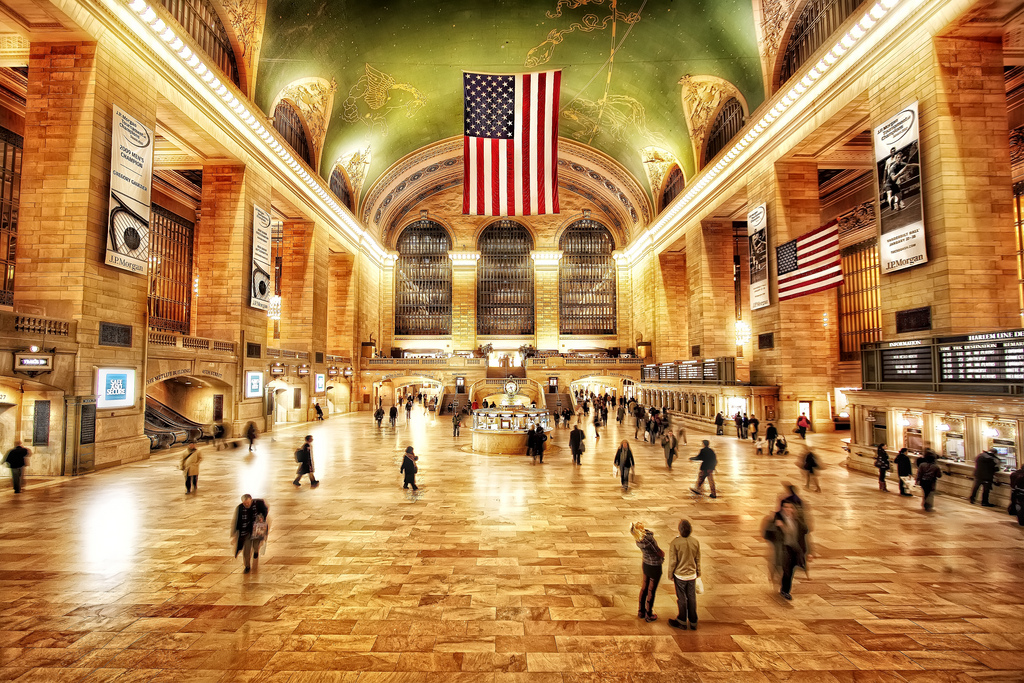
I based this question on a presentation by Adam Greenfield at dConstruct09 in September entitled Elements Of A Networked Urbanism. During this presentation he asked a similar question of New York City, where the correct answer traditionally has been the clock in Grand Central. This what is referring to as a ‘focal’ or Schelling point. Named after Professor Thomas Schelling, the 2005 Nobel Prize recipient, a Schelling point is “that which gives a group of like-minded individuals their common purpose.” Groups with strong Schelling points are able to “coordinate their actions with minimal communication.”

3572441144 01a6ebd88e ‘Schelling’ the City

Image from mistdog on Flickr

Mr. Greenfield calls such places points are ‘nodes of unconscious coordination” that people in cities around the word have historically used to make sense of urban place. Most urban places have one. In Tokyo it’s the statue of the dog in Hachiko Square. In London it is under the clock in Waterloo Station. According to Adam, most cities have Schelling points, because, without effective communication between people (i.e., cell phones), meeting places ultimately converge on a couple of high visibility—and usually iconic—destinations.

There is nothing inherent about Grand Central Station that makes a particularly desirable meeting place. In fact its crowded and often hectic nature may actually be a detriment; it may likely be easier to meet someone at a quiet bar, or the public library reading room. Nevertheless, the popular notoriety of Grand Central Station as a meeting place raises its prominence and makes it a natural “focal point.”

As an ‘incurable urbanist’ I was taken by this concept, and wondered if any place in Phoenix could be considered a legitimate Schelling point, hence the question I posted. Here are the responses:

  • Civic Space Park
  • Lux Coffee
  • Phoenix Art Museum
  • Chase Field
  • US Airways Center
  • Central and Adams, by the ‘crazy preacher’
  • Central and Washington (point ‘zero’ in the street numbering grid)
  • 4th and McKinley
  • Phoenix Public Market and have a glass of wine till they found me! (My personal favorite)
  • Phoenix City Hall
  • Cibo
  • Carly’s
  • Fair Trade Café/Central and Roosevelt
  • Revolver Records
  • Lost Leaf
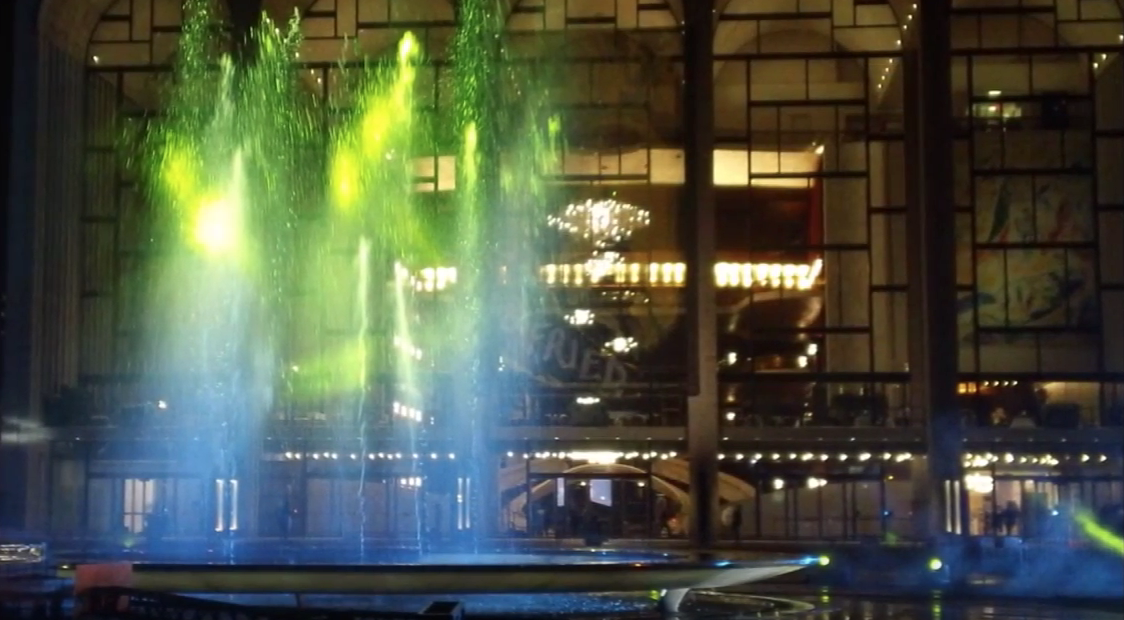
3992203564 af07c9f8b8 ‘Schelling’ the City

Civic Space Park

While Civic Space Park was the most popular answer, due largely you the controversial and highly visible ‘floating jellyfish sculpture, the numerous responses reflects the fact that Phoenix is an auto dominated, sprawling city, that has long neglected it’s downtown. As a result the city doesn’t have traditional gathering points like in cities established before the automobile.

What I found most interesting, however, is that several people responded that they simply would go anywhere without more information. While, in part, this reflects the lack of a vibrant urban core on another level, the response highlights the rise of ‘ubiquitous computing’ promoted by the prevalence of ‘smart phones.’ This was the point of Greenburg’s entire presentation: that when everybody (and everything is networked, you no longer need unconscious co-ordination. Rather you can simply post on Twitter, Facebook, FourSquare, BrightKite, etc that I’m and the Corner of Washington and 7th St, or I’m at Lux Coffeebar, or Gangplank, or Rula Bula, and this functions as a ‘flocking’ or ‘shoaling’ point: a place where people converge.

This not only has impacts for how people interact with each other, but also with their cities and neighborhoods. Social activity is increasingly less about specific times and places and more about converging at locations where have announced their presence or have expressed as their destination. As a result, what we’ve long understood as the nature of community as a loose connection of people within a neighborhood or interest group is morphing to a much more conscious social network.

This is not the first time I’ve mused about this topic (see my Ignite Phoenix 5 presentation on Slideshare or YouTube), nor will it be the last. I’m still not 100% sure of the final outcomes of this shift, but I feel that it will be huge. Stay tuned for further updates as my research and thinking progresses. In the meantime, please let me know what you think in the comment section.

This is day 2 in my 28 Day Blogging Challenge. 26 more to go.

 ‘Schelling’ the City

Thanks for being a regular reader of my site!

Jan 14

From: Jane’s Walk Phoenix Please check it out for more information on Jane Jacobs and for details of Jane’s Walk 2010 taking place on May 1 & 2, 2010.

*     *      *

I came across this post on Planetizen. It provides an interesting perspective and touched on an issue that I’ve long wrestled with: authenticity, preservation and organic development. From the article: “just what does authenticity mean, and who is really allowed to claim it?”

Jane Jacobs, Gentrifier?
Posted by: Tim Halbur
11 January 2010 – 9:00am

Prof. Sharon Zukin argues that Jacobs had “a gentrifier’s appreciation of urban authenticity” in her new book, Naked City.

Zukin tackles the issue of gentrification and the people who lay claim to the authenticity of neighborhoods, particularly in New York. She finds no easy answers, but does believe in the quest to preserve authenticity.

In the New York Post: “In the end, New York City development revolves around who successfully claims ownership of a neighborhood. Conflict arises when ‘groups representing the opposing visions claim the same space,’ Zukin says, especially in ‘the conflict over authentic representations of neighborhoods like Red Hook, between old working-class homeowners, public housing project tenants, and gentrifiers.’”

Full Story: Naked City

Source: New York Post, January 10, 2010

suburban city  300x300 Jane Jacobs, Gentrifier?
From my other blog, Jane’s Walk Phoenix

 Jane Jacobs, Gentrifier?
Jan 13

From GOOD.is, The Slow Issue. Originally posted by Alissa Walker on January 13, 2010 at 7:00 am PST.  Cross-posted on Jane’s Walk Phoenix.

Reading a City

018 reading arch 1 GOOD.is on Jane Jacobs—’Reading a City’

How the built environment instructs us on how to move through it


Greene Street Jane Jacobs wrote about the “ballet” of the street when describing the rhythm of her Greenwich Village neighborhood, which she viewed as a choreographed exchange between resident and sidewalk, and shopkeeper and stoop. Not too far away, Greene Street in New York’s SoHo neighborhood pulses with the same syncopated footsteps and echoes of Jacobs’s legacy. She prevented this entire neighborhood from becoming the Lower Manhattan Expressway—now cars shudder down the street, forced into submission by century-old cobblestones. The former cast-iron warehouses have been fashioned into frilly storefronts for the well-heeled (and often high-heeled) who stop, gape up at their pillared facades; pause; peer into the jewel-like windows; and are rewarded with detail…

More here

 GOOD.is on Jane Jacobs—’Reading a City’
preload preload preload