" />

Friday 5: Aug 28-Sep 3.

On September 3, 2010, in Friday 5, articles, by Yuri Artibise
Five fascinating finds for Friday:
  • Reclaiming the Urban Memory: The Great Recession, climate change and the quest for carbon neutrality have reoriented how we look at cities, the distance between home and work, and the role of the automobile. (My Urbanist)

 Friday 5: Aug 28 Sep 3.

Enhanced by Zemanta

Thanks for being a regular reader of my site!

arcadex wide community Explore Your Own Suburban Wilderness, Courtesy of Arcade Fire

Screenshot

Canadian based rock band Arcade Fire is one of those indie bands that has buck the trend instead of selling out or watering down as they get bigger they just keeps getting better. This week they introduced a revolutionary new music video format.

The Wilderness Downtown uses a mashup of Google’s Street View, HTML5 video and some impressive overlays to create a multimedia viewing experience. All you need to do is input the address you grew up in and it will build an immersive film by director Chris Milk with Arcade Fire‘s “We Used To Wait” around it.

I recommend watching it as soon as possible. While it is not perfect (few pioneering experiments are), it is an extremely cool idea put into action.

af7 Explore Your Own Suburban Wilderness, Courtesy of Arcade Fire

Screenshot via designboom.com

The video is especially powerful for me, as the move I grew up in, is the home I watched my first music video in and this memory is only strengthened by the nostalgic atmosphere of the video.

Caveat: The clip requires Google Chrome (or a fully HTML5 Compliant browser). If you aren’t already using it, you really should be, so use this opportunity to download it! Also, for best results, close as many running programs as possible, all the interactive goodness taxes even the speediest processors.

We Used to Wait is found on Arcade Fire’s latest album, The Suburbs. The entire album has an urban planning theme, which makes it all the more awesome. Canadian, interactive AND urbanist, what more could I want!?!

Enhanced by Zemanta

Friday 5: August 21st -27th

On August 27, 2010, in Friday 5, articles, by Yuri Artibise
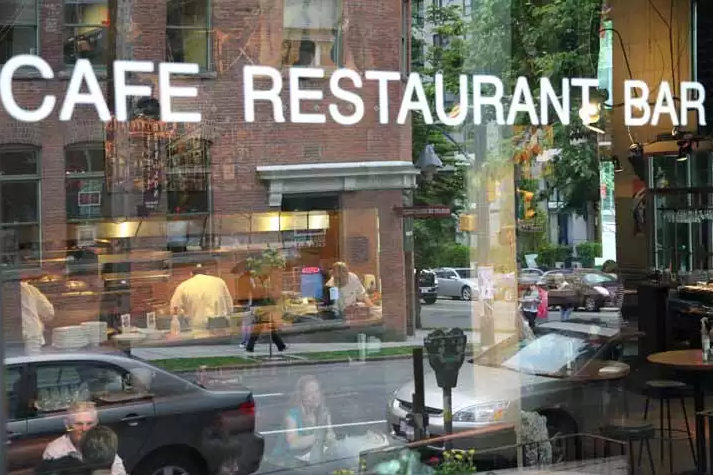
  • Great Good Places: New restaurants that look like they’ve been part of their neighborhoods forever all share a subtle but ambitious social agenda: to create and celebrate community.(MetropolisMag.com)
Enhanced by Zemanta
4569093492 2f83ecba00 z The Magic is in the Mix: Rethinking Mixed Use Urbanism

Photo Credit: Nick Bastian on Flickr

‘Mixed-use’ is one of the most over-used, yet most misunderstood phrases in urban development. In recent years, ‘mixed-use buildings’ has become the new planning dogma, just like ‘specialized buildings’ was before it.

Many cities have invested a lot of money in developing mixed-use buildings, streets and neighborhoods, but haven’t achieved the urban vibrancy they want. This is often times because their underlying urban fabric remains coarse (i.e. large and monotonous).

In most new urbanist mixed-use developments the residential units are often all high-end condos and the retail is usually a series of chain stores. Moreover, little in the neighborhood is more than a few years old. Thus, although the uses may seem mixed, the culture is monolithic. At the same time, many arts districts face the same fate of attracting monolithic culture (albeit completely different from the previous example). A block of live work galleries doesn’t make for a vibrant neighborhood bur rather an artists ghetto.

Looking for a Phx

In downtown Phoenix, these two extremes are seen in the artist collectives and bars that have functioned, but never flourished along Grand Ave for the past decade or so on one hand; and the monotonous collection of upper middle-class restaurants and retail outlets being rolled out at CityScape on the other.

The reason that these types of mixed-use areas fail to live up to expectation is that they are too economically—and therefore, functionally limited—to be lively, interesting and convenient for a range of people. They lack the intermingling of class and functionality that offer the stimulation and interest essential to a vibrant urban core.

So the question remains: If mixed-use isn’t the answer, what it?

Urban Diversity

Perhaps a better way of looking at mixed use, is ‘diversity’. This was a basis tenant of Jane Jacobs in her classic tome, The Death and Life and Great American Cities. Diversity, according to Jacobs, isn’t simply a mix of uses but an integration of business types:

4424212013 d470026667 z The Magic is in the Mix: Rethinking Mixed Use Urbanism

Photo Credit: UrbanGrammar on Flickr

“True diversity requires the “mingling of high yield middling yield, low yield, and no-yield enterprises” —Jane Jacobs

To me, “mixed use” means more than mixing residential and commercial. It also means proximity to other uses like schools/universities, parks, museums, courthouses, industries, meditation, train stations, etc. The reality is that not every building needs to have multiple uses or tenants but each block should and each neighborhood must.

These kinds of destinations help to define a city’s identity. They do so through the variety of uses and public spaces that highlight local assets and unique talents and skills of the communityeducational, cultural, and commercialthat are all open and available to all visitors to enjoy for free.

Such neighborhoods allow residents to visit, become involved and stay awhile. They are not defined by architecture, but rather the uses that are front and center and the buildings and design elements that support them.

Replacing Mixed with Multiple

“It is fatal to specialize… the more diverse we are in what we can do the better.” Jane Jacobs

Perhaps then it is time to move beyond the simple concept of ‘mixed use’ to a more robust style of development. The time of simply thinking of urban development as “Starbucks over condos, maybe with a train that comes every day” has passed.

Instead we need to start thinking of creating neighborhoods that build authentic places through multiple uses that are intimately related, interconnected and interdependent. After all, true urban diversity comes from the relationships between uses, tenants, and the organizations within a place.

Enhanced by Zemanta

City Cultivation: Tending to Urban Terroir

On June 30, 2010, in urbanism, by Yuri Artibise

Every neighborhood will need to tend its own vineyard, with a better understanding of how this contributes to the urban terroir.John Parman

 City Cultivation: Tending to Urban Terroir

In my last post, I explored the concept of urban terroir.  at its root, this concept refers to the elements that make up the conditions of our urban spaces. Today, I want to look how to cultivate urban terroir and improve a city’s sense of place.

Cultivating urban terroir requires a conscious relationship. Despite an ever-growing city planning apparatus and an elaborate urban plans, the recent development of most cities in North America (and indeed the world) have largely reflected whims of politicians and developers. Most new projects are not focused on growing a sense of place for residents, but rather maximizing political bragging rights, and private sector profits. The result is a few mega projects surrounded by large swathes of the city that remain undernourished and ultimately underperforming.

A city’s leadership has a vital role to play in rectifying this pattern and ensuring that ALL of their urban terroir is healthy. Just as a farmer must tend each plant over the course of the growing season, those involved in cultivating  a city must tend to the needs of each resident business owner and visitor if the community is to thrive.

Civic leaders (both politicians, activists alike) have to balance the claims of the developers with the needs of the community. Most of all, they need to avoid the ‘urban branding’ schemes and grand visions that promise solutions for all, but ultimately fail to deliver the desired changes. instead, they have to connect the dots and help the community understand and explore its options, neighborhood by neighborhood.

The community has responsibilities as well. Neighborhoods are alive because the people who live there care about them and take part in their cultivation. Alas, many communities have let their cultivation tools get a tad rusty. In an era where in almost ever other aspect of their lives, people go online to find information and connect with specific communities to cultivate their interests, the current mechanisms for connecting neighborhoods and communities are woefully dated.

While face to face town-hall style meeting will also remain an important part of community cultivation, we need to do a better job of applying the lessons and methods for social media to facilitating dialogue between “interested” communities, augmented by official city channels when necessary. President Obama’s revolutionary 2008 campaign illustrated the potential that such an approach has.

Of course, this is easier said than done.  Just as harvesting a consistently high-quality of wine is a difficult challenge, made all the difficult by varieties in climate and other outsides forces, the same is true for cultivation communities. Outside factors will always exist. The trick is to deal with these when they arise, but continue to focus on the urban terroir that you can influence. It isn’t easy, but, like a great bottle of wine, cultivating a great community is worth the effort.

Enhanced by Zemanta

Genius Loci in Practice

On May 28, 2010, in Uncategorized, by Yuri Artibise

Yesterday, I introduced the concept of ‘genius loci.’ Today, I’d like to begin to explore it’s practical application in cities.

Every place has its own unique qualities, not only in terms of its physical makeup, but of how it is perceived. As I discussed yesterday, these unique qualities help make up the genius loci of a place. In principle, it is the responsibility of the stewards of the city—whether they be politicians planners, business owners or developers—to be sensitive to these qualities and strive to enhance them.

Alas, too often in the ‘real world’ these same people work to destroy them. Rather than adapting their visions to the genius of their place, they try to force their own vision (usually a vision borrowed from another place) on the city. These so-called stewards are preoccupied with the physical lens of the city and concentrate only on its built form, neglecting what makes their city special.

popup bianco1 Genius Loci in Practice

Indeed, these leaders need to take a step back and begin to appreciate residents use the streets and spaces of their city  from hour-to-hour, day-to-day and throughout the year. They need to do a better jobs honoring the resident spirit of a place and understand how residents, from ALL walks of life interact with the city and have adapted their daily patterns to what already exists. By doing so, it is possible to create a powerful genius loci in almost any neighborhood, and indeed with almost every project on almost any property.

Building a strong genius loci in a city or neighborhood begins by paying attention to the spirit of place already there. Rather than pointing to a place on a map and planning to build something solely because the property is available, affordable or conveniently located, it is important to consider what already exists. The first step, therefore,  is to find the abiding character that inhabits the site—no matter how subtle.

A sensitivity to what is already there tells you what would be appropriate or inappropriate when planning and deciding what should be added. The character and atmosphere of the neighborhood or surrounding properties and any existing building styles are often as important as the planned use and design for the site. Aspects as varied as the surrounding land, the history of the neighborhood or district, and how the property interfaces with the larger geographic area all need to be considered, and indeed should offer the starting point and creative inspiration for any development.

Coming soon: One area where the City of Phoenix is making progress in developing ‘genius loci.’

Do you have a favorite place in the city or your hometown? What characteristics makes it special or memorable? Can you name any recent developments, here or elsewhere that have done a good job at incorporating an existing ‘spirit of place’?

Reblog this post [with Zemanta]

Being an urbanist is hard in Phoenix.  Even when the city takes a step in the right direction, it faces opposition. This week, one such example has come to my attention. The proposed expansion of the “Arts, Culture and Small Business Overlay” is being discussed at the Central City Village Planning Committee on Monday.

wei 300x225 One ‘Wei’ to Support a Vibrant Downtown Phoenix

1302 W Roosevelt St

The current overlay has been in place since April 2008.  It has been responsible for many of the new galleries and small businesses in and around downtown that have opened in the past few years, including many featured during this past weekend’s Art Detour. It has been such a success, in fact, that the city would like to expand it to other parts of downtown. Alas, there has been some opposition by nearby residents, making a slam dunk decision into a much more tentative one.

Here is a letter from one of my friends who will be directly affected by the outcome of this weeks meeting.

Hi there,

My name is Katie Hess. I am relatively new to the neighborhood.  I bought a house at the NW corner of 13th Ave. and Roosevelt about a year and a half ago.
[…]

Since I purchased my house, I have worked hard to fix it up, and have had many volunteers as well, including a group of herbalism graduates that came to help plant trees, plants, and flowers.  We also painted everything inside and out.  The house used to be a drab dusty color, and now is sky blue with a mango wall.

My intention in supporting the overlay program is to bring goodness and positive energy to the neighborhood. When I first moved in, people were taking naps in the front lawn everyday, but that soon stopped.  We’ve noticed that the negative activities in our area have declined.  There is less trash in the alley and fewer intoxicated people hanging out.  Over time we’ve really gained respect on our street because we take pride in our neighborhood and really value what we have.

My background is in natural medicine, my main specialty in flower essence therapy (the kind without the scent, taken internally to enhance happiness).  I hand-collect the flower essences from flowers around the world, as well as growing flowers here at the house to infuse them into elixirs, body care, spa products, and even organic dark chocolate. My business partner, Lisa Reinhardt, owns an organic, fair-trade dark chocolate company.  We may know some of you from the Downtown Phoenix Farmers’ Market, as we’ve had a booth there for several years now.

Since this house is zoned R-5 we have permission to use part of the space for business purposes, and so for the last year or so my flower essence therapy clients have made appointments with me there during the day.

We are in support of the overlay program for our property, because we’d like to have the opportunity to allow people to come and buy organic chocolates and organic skin care/body care products.  We think it would be wonderful for our neighborhood to have a resource, sort of a ‘wellness’ atmosphere, where you can walk down the block to buy healthy chocolates that boost your immune system and other organic products to keep you healthy and happy.  I believe that this type of community activity would continue to decrease the negative things that we all don’t want to see and enhance our neighborhood.

I have talked with most of my neighbors to the west of me all the way to Grand, as well as the apartment buildings to the south and to the east of us, and everyone is supportive.

For these reasons, I’m asking for your support of the Arts, Business, and Culture Overlay Program.  The proposed overlay areas would only affect the corner of 13th Ave and Roosevelt west to 15th Ave and Grand Ave, as well as one property on the NE corner of 15th Ave and Portland St.

If you have any questions I am happy to answer them.

Warm regards,

Katie Hess
1302 W. Roosevelt

Last week, I talked about the need for people to get involved in their community.  Katie has done this.  She now wants to take here involvement to the next level. Expanding the Arts and Culture Overlay will allow her (and others) to do just that.

However, to make her dream a reality, she needs your help. If you are free Monday night (Mar 8th at 6pm) please come out and show your support for the overlay expansion at the Village Planning Committee meeting.  The meeting will take place at 6:00 pm at Emerson Court, School District Board Room, 1817 North 7th Street (southeast corner of 7th Street and Palm Lane).

It is important that those of us who seek a vibrant downtown make our voices heard at events such as these. You don’t need to speak, or even stay for the entire meeting. You can just fill out a card with your name and address, and say that you are in favor, and then leave.  If you can’t make it, yet want to show your support, please send an email to Katherine Coles, the City of Phoenix contact for the committee.

 One ‘Wei’ to Support a Vibrant Downtown Phoenix

Usually I have a hard time whittling down my weekly reading list to just five.  This week I didn’t have a problem.  Not because there weren’t tons of great articles out there, but because I haven’t had a chance to read as much.  Here are about the only five articles I read this week (although they are all excellent :-) ):

www flickr com photos nobara  Friday Five: What I Read in the Week that Was

Credit: Nobara Hayakawa (Flickr: nobara)

  • Consequential Strangers: A review of a book that looks at why the people we take for granted like our car mechanic, the bakery clerk and the fellow dog-walkers at the park, are actually more important people in our lives than we may imagine.
  • Bill Gates Is Wrong As Usual: To Mac addicts like me, this title may not be shocking, but the reason just may be.  This post looks at why Gates’ recent TED presentation was wrong-headed and potentially dangerous to the climate change movement.
  • The 10% Solution: The post links to one of the best articles I’ve read on urban strategy in a long while.  It is a great reminder at how seemingly modest goals can have transformative impacts. I will be following up on this concept and how it applies to Phoenix in the near future

This is day 24 in my 28 Day Blogging Challenge. 4 days to go.


 Friday Five: What I Read in the Week that Was
Blog WebMastered by All in One Webmaster.